
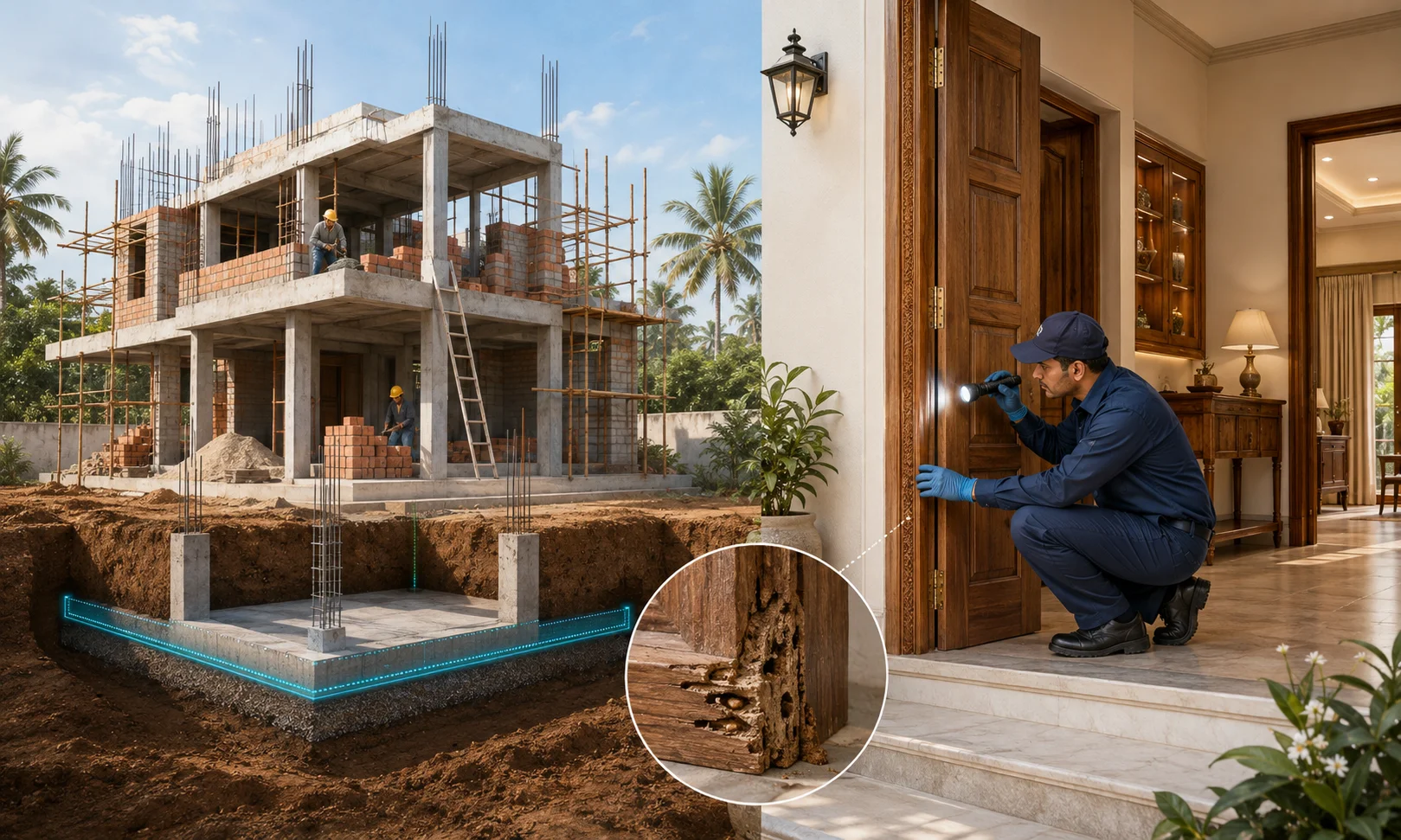
New homes need termite protection planned into construction; old homes need an inspection-led treatment plan that addresses the infestation and its entry routes. Anti-termite treatment, often called deemak treatment, should match the building, the termite type and the areas a professional can actually access. This guide helps you understand the options, prepare for a visit and compare quotations before committing to work.
New vs Old Homes: Which Termite Treatment Do You Need?
Start with your home's stage of construction. A house with finished floors needs a different access plan from a site where foundations and soil are still exposed. Share the construction drawings, previous treatment records and any visible damage with the inspector.
| Home condition | What to discuss | Main planning priority |
|---|---|---|
| New home under construction | Pre-construction termite protection | Coordinate protection with foundation, service and flooring work |
| Completed home with suspected activity | Inspection and post-construction treatment | Identify activity, entry points and accessible treatment zones |
| Old home being renovated | Inspection before new joinery or flooring | Expose and assess concealed damage before covering it |
| Damage confined to furniture | Identify the pest and assess adjoining areas | Confirm whether the issue is local or connected to the building |
| Apartment with recurring activity | Flat inspection and building-level coordination | Review shared service routes and previous complaints |
Early Signs of Termites in a House
Mud tubes on masonry, discarded wings near windows and timber that sounds hollow can indicate termites. Sticking doors and blistered finishes also have other causes, including moisture, so symptoms alone are not a diagnosis. Photograph the affected area and arrange identification before repairs obscure the evidence.
- Look around door frames, skirting, under-sink cabinets and accessible wall-floor junctions.
- Note where and when you first noticed insects, wings or damage.
- Ask the inspector to distinguish current activity from old damage and record inaccessible areas.
- If a floor, beam or stair feels weakened, arrange a building assessment as well as pest inspection.
The University of Maryland Extension's termite guide explains common warning signs and why follow-up inspections matter.
Why Identifying the Termite Type Matters
Subterranean termites use routes from the ground into a structure, while drywood termites can live within timber. A treatment aimed only at visible wood may miss an underground source; soil treatment alone does not resolve every infestation inside wood. Wood-boring beetles can also leave confusing evidence. Ask the provider to explain the identification and why the proposed method fits it.
For the distinction between termite groups and their management, see UC IPM's subterranean termite guidance and its drywood termite guide. These explain general principles; local product requirements still apply.
Pre-Construction Termite Treatment for New Homes
Bring termite protection into the construction schedule before foundations and floor build-ups are concealed. Ask your contractor and pest specialist for a coordinated plan showing the proposed system, stages of work and who checks completion at each stage. A single visit described as a general spray is not a clear construction protection specification.
- Before work: share foundation details, floor levels, service penetrations and landscaping plans.
- During construction: confirm which exposed areas need treatment or physical protection under the chosen system.
- Before covering work: obtain dated records and photographs of completed stages.
- After plumbing or excavation changes: have the specialist assess whether protection was disturbed.
- At handover: collect product details, a treatment location plan, warranty terms and the inspection schedule.
For a project in Moradabad, explore pre-construction termite treatment before finalising the flooring programme. Waterproofing and termite protection address different problems; coordinate both with the construction team.
Post-Construction Termite Treatment for Old and Occupied Homes
For an existing house, request an inspection before accepting a standard package. The written proposal should identify affected rooms, suspected access routes, the treatment scope and areas that cannot be reached without opening finishes. Tell the provider about previous treatments, recurring leaks, concealed wiring and recent renovations.
- Agree the access plan: which cupboards must be emptied and which furniture must be moved.
- If drilling is proposed, ask for the locations and how concealed utilities and finishes will be protected.
- Confirm whether the quote includes sealing access holes and making good the affected finishes.
- Separate pest treatment from carpentry, damp repairs and structural repair quotations.
- Get written preparation, re-entry and follow-up instructions before the appointment.
Avoid installing new wardrobes over an unresolved problem. During renovation, use the period when old joinery is removed to inspect exposed surfaces and agree repairs before closing everything again. Read about termite treatment in Moradabad or request a property-specific assessment.
Common Termite Treatment Options Explained
Common approaches include soil-applied liquid treatment, bait systems, targeted wood treatment and physical barriers during construction. The appropriate combination depends on the pest, building access and product instructions. The EPA's termite treatment overview explains these broad categories. It is a US consumer resource, not a list of products authorised for use in India.
| Option | Question to ask before choosing |
|---|---|
| Soil treatment | Which ground-entry routes does the proposed treatment address, and what remains inaccessible? |
| Bait system | Who checks the stations, how are visits scheduled and are ongoing charges included? |
| Local wood treatment | What evidence supports treating only this area, and how will adjoining areas be assessed? |
| Construction barrier | How does the system integrate with foundations and service penetrations? |
| Combined plan | What does each part of the plan address, and how will the outcome be checked? |
What Determines Termite Treatment Cost?
A useful termite treatment quotation states the scope, not just a price per square foot. Two homes with the same floor area may require different work because access, construction stage and the extent of damage differ. Request an itemised estimate after inspection rather than treating a generic online rate as the final bill.
- Measurement basis: built-up area, treated area, perimeter length or a fixed scope.
- Coverage: rooms, woodwork, external areas and any excluded or inaccessible locations.
- Method and visits: initial work, monitoring, follow-ups and renewal charges.
- Access and restoration: moving items, opening finishes, drilling and sealing.
- Commercial terms: taxes, payment schedule, written warranty and retreatment conditions.
Compare two or three written proposals using the same scope. Ask whether damage repairs are covered or separately chargeable. For local service enquiries, review pest control cost in Moradabad and request a termite-specific quotation.
How to Prepare Your Home for Treatment
Follow the provider's written preparation instructions for the actual product and method. Ask for the product name, label directions and safety information. Keep children and pets away from treatment areas until the specified re-entry conditions are met; an absence of odour does not establish that re-entry is appropriate.
- Ask what to remove or protect, including food, utensils, bedding and pet items.
- Arrange access to the agreed inspection and treatment points.
- Flag aquariums, wells, water storage and any household concerns before work begins.
- Confirm ventilation, cleaning and room-use instructions with the provider.
The EPA's pest control precautions support following product instructions and obtaining information about chemicals used. Do not mix pesticides or substitute household fuels for a professional treatment.
Preventing Termites After Treatment
Keep foundations and inspection points accessible, reduce wood-to-soil contact, remove discarded timber and repair leaks. Moisture management and inspections remain useful even after treatment. These prevention principles are covered in the EPA's homeowner termite guidance.
- Add under-sink and damp-area checks to your household maintenance list.
- Store the inspection report and treatment plan with your property documents.
- Tell future plumbers, builders and landscapers where protection was installed.
- Before renovation, ask whether the proposed work requires a protection review.
- Keep the agreed follow-up appointments and report fresh signs with photographs.
How Long Does Treatment Last, and What Does a Warranty Cover?
Do not assume that a warranty period is a promise that termites can never return. Ask what the provider will do if activity is reported, which areas are covered, whether inspections are mandatory and whether renewal fees apply. A retreatment agreement and a damage-repair guarantee are different commitments.
The service record should state when the next inspection is due and how to report a concern between visits. Ask for criteria the specialist will use to assess progress rather than relying only on the disappearance of visible insects.
If you buy an older property, request the previous owner's treatment history and check whether any existing contract transfers to you. Keep new inspection findings separate from assumptions about past work.
Arrange a Termite Inspection with Space Build
Planning a new home, replacing damaged joinery or seeing signs of deemak? Contact Space Build with your location, construction stage, affected areas and photographs. Ask for an inspection-led scope that coordinates termite work with any interior or repair work. You can also explore our pest control services to discuss your property requirements.
Frequently Asked Questions
What is the difference between pre-construction and post-construction termite treatment?
Pre-construction protection is coordinated with building work while relevant areas are exposed. Post-construction treatment is planned around an existing building's access, finishes and inspection findings.
Can termite treatment be done without removing all the flooring?
Ask the inspector to specify the access needed for your home. Some plans use limited access points, but concealed damage or inaccessible areas may require opening finishes. The proposal should explain this before work starts.
Which termite treatment is best for an old house?
The appropriate plan depends on pest identification, affected areas, ground access and the building's condition. Request an explanation of why the proposed method fits the inspection findings.
How much does anti-termite treatment cost?
A property-specific price depends on scope, measurement basis, access, method and included follow-up visits. Ask for an itemised quote that separates treatment, restoration, taxes and renewal charges.
Do I need to leave the house during termite treatment?
Ask for written instructions for the exact product and treatment area. Room access and re-entry depend on those instructions; do not assume a universal waiting period applies.
Does termite treatment repair damaged wood?
Pest treatment and material repairs are separate tasks. Ask for a damage assessment and a separate scope for replacing weakened joinery or addressing structural concerns.
Does a regular pest control package include termites?
Check the written scope. Do not assume a general household pest package includes termite inspection, treatment or a termite warranty.
Can termites come back after treatment?
No plan should be treated as a permanent guarantee against future activity. Keep the agreed inspections, report fresh signs and have protection reviewed after construction or landscaping changes.